
Gobierno de Costa Rica
Constitución de 1949
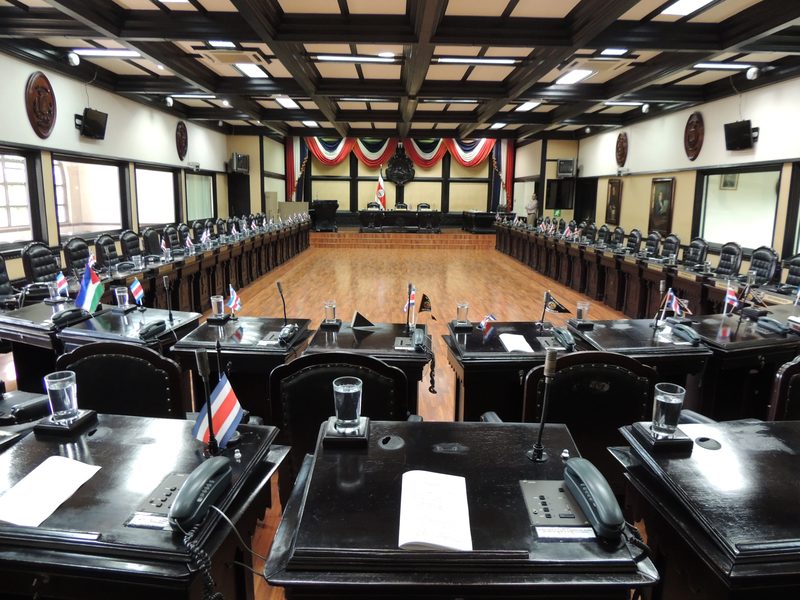
La Constitución Política de Costa Rica fue promulgada el 7 de noviembre de 1949, tras la Guerra Civil de 1948. Es el fundamento de todo el sistema jurídico y político del país.
Entre sus logros más importantes se encuentran la abolición del ejército (Artículo 12) y el establecimiento del sufragio universal, otorgando el derecho al voto a las mujeres y a las personas afrodescendientes.
Poder Ejecutivo
El Presidente de la República es elegido por voto popular para un período de 4 años. No existe la reelección inmediata; un expresidente debe esperar dos períodos (8 años) antes de postularse nuevamente.
Costa Rica cuenta con dos Vicepresidentes que acompañan al Presidente en la fórmula electoral.
El Consejo de Gobierno está conformado por el Presidente y sus Ministros. Este órgano toma las decisiones ejecutivas más importantes del país.
Poder Legislativo
La Asamblea Legislativa es un parlamento unicameral compuesto por 57 diputados, elegidos para períodos de 4 años. Los diputados no pueden ser reelegidos consecutivamente.
Los diputados son elegidos por provincia mediante un sistema de representación proporcional.
- Crear, reformar y derogar leyes
- Aprobar el presupuesto nacional
- Ratificar tratados internacionales
- Ejercer control político sobre el Poder Ejecutivo
Poder Judicial
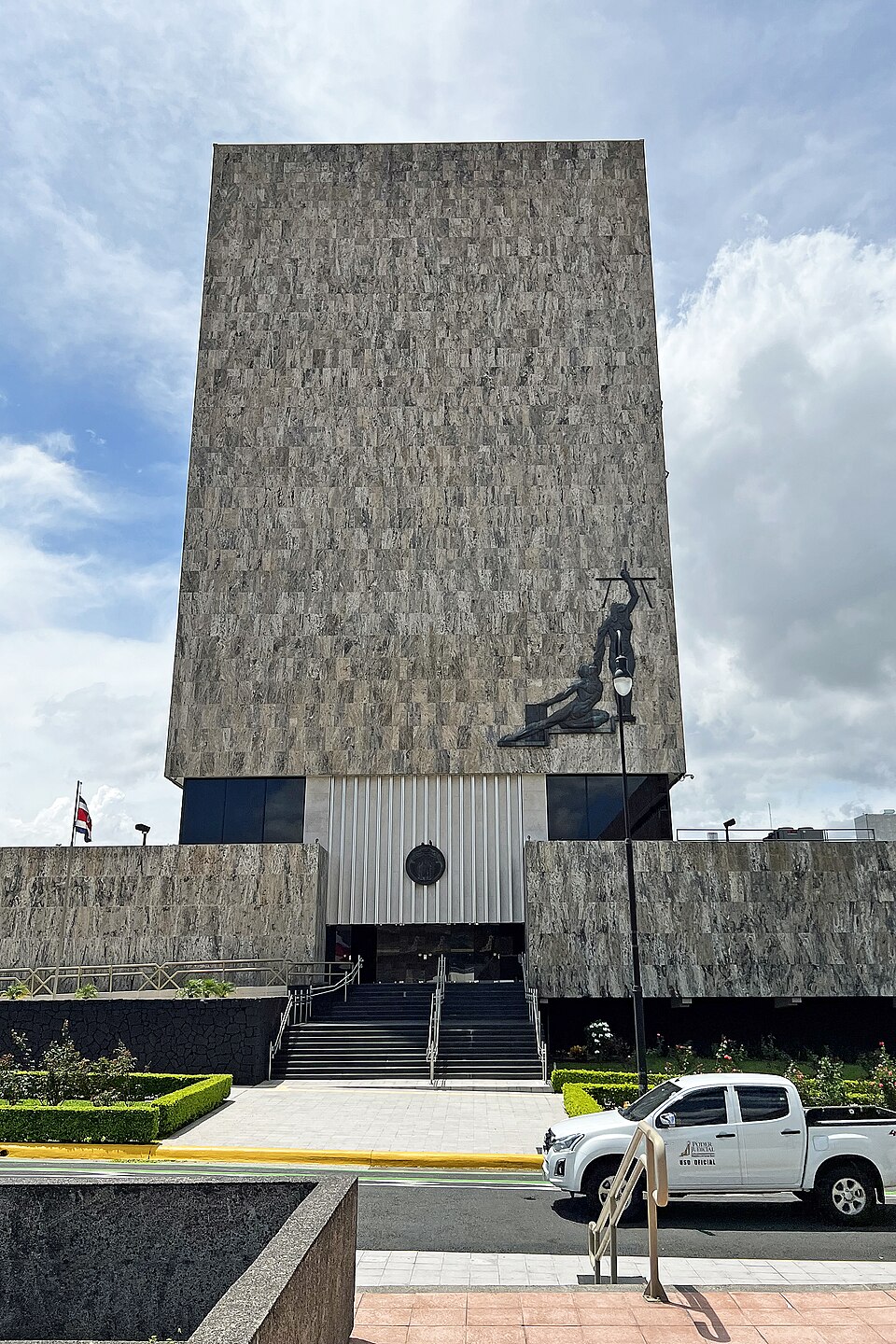
La Corte Suprema de Justicia está compuesta por 22 magistrados, elegidos por la Asamblea Legislativa para períodos de 8 años.
La Corte se organiza en cuatro salas:
| Sala | Materia |
|---|---|
| Sala Primera | Civil |
| Sala Segunda | Laboral |
| Sala Tercera | Penal |
| Sala Constitucional (Sala IV) | Derechos constitucionales |
Tribunal Supremo de Elecciones (TSE)
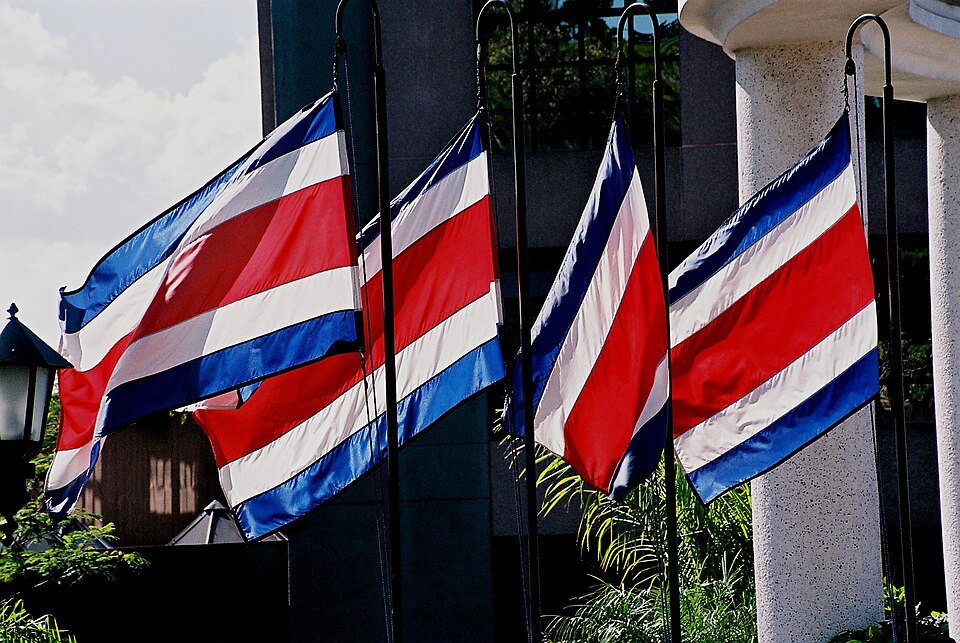
El TSE funciona como un cuarto poder del Estado. Es un órgano independiente con rango constitucional.
Sus principales funciones son:
- Organizar, dirigir y supervisar las elecciones
- Interpretar la legislación electoral
- Administrar el Registro Civil: nacimientos, matrimonios, defunciones y cédulas de identidad
Abolición del Ejército
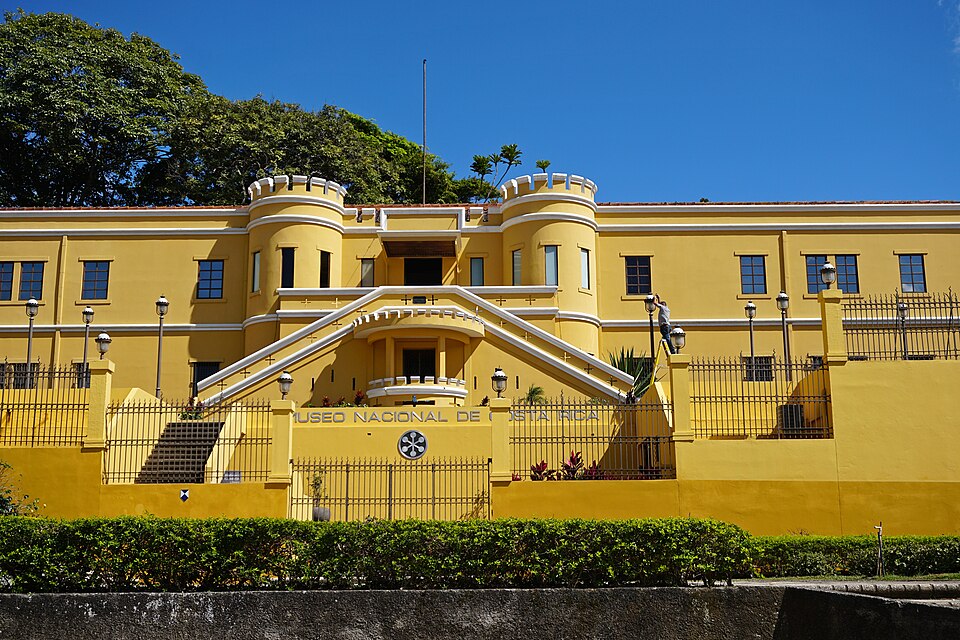
El 1 de diciembre de 1948, José Figueres Ferrer entregó las llaves del Cuartel Bellavista al Ministerio de Educación Pública, simbolizando la abolición del ejército.
El Artículo 12 de la Constitución establece: "Se proscribe el Ejército como institución permanente."
El 1 de diciembre se celebra como el Día de la Abolición del Ejército. El antiguo cuartel fue transformado en el Museo Nacional de Costa Rica.
Government of Costa Rica
Constitution of 1949
The Political Constitution of Costa Rica was enacted on November 7, 1949, following the Civil War of 1948. It is the foundation of the country's entire legal and political system.
Among its most important achievements are the abolition of the military (Article 12) and the establishment of universal suffrage, granting voting rights to women and Afro-descendant citizens.
Executive Branch
The President of the Republic is elected by popular vote for a 4-year term. There is no immediate reelection; a former president must wait two terms (8 years) before running again.
Costa Rica has two Vice Presidents who accompany the President on the electoral ticket.
The Government Council is made up of the President and the Cabinet Ministers. This body makes the most important executive decisions in the country.
Legislative Branch
The Legislative Assembly (Asamblea Legislativa) is a unicameral parliament composed of 57 deputies, elected for 4-year terms. Deputies cannot be reelected consecutively.
Deputies are elected by province through a system of proportional representation.
- Create, reform, and repeal laws
- Approve the national budget
- Ratify international treaties
- Exercise political oversight over the Executive Branch
Judicial Branch
The Supreme Court of Justice is composed of 22 magistrates, elected by the Legislative Assembly for 8-year terms.
The Court is organized into four chambers:
| Chamber | Jurisdiction |
|---|---|
| First Chamber | Civil |
| Second Chamber | Labor |
| Third Chamber | Criminal |
| Constitutional Chamber (Sala IV) | Constitutional rights |
Supreme Electoral Tribunal (TSE)
The TSE functions as a fourth branch of government. It is an independent body with constitutional standing.
Its main functions are:
- Organize, direct, and oversee elections
- Interpret electoral law
- Manage the Civil Registry: births, marriages, deaths, and national ID cards (cedulas)
Abolition of the Military
On December 1, 1948, José Figueres Ferrer handed the keys of the Bellavista Barracks to the Ministry of Education, symbolizing the abolition of the army.
Article 12 of the Constitution states: "The Army as a permanent institution is proscribed."
December 1 is celebrated as the Day of the Abolition of the Military. The former barracks were transformed into the National Museum of Costa Rica.